
Parents are seen as an essential pillar in their child’s educational success. The classic phrases of “my door is always open” and “we’re a team” are in the Back to School presentation; where for the most part they stay safely tucked away until there is an issue. That may be unfair. For some teachers the painstakingly long newsletter lets parents know about the week’s events and suggests ways they may get involved. What does that look like in the upper grades where student autonomy should be on the rise? How can parents continue the conversation about school beyond “What did you do today?” with their upper elementary child?
I’ve definitely been the teacher who sent home the weekly newsletter and I found that parents didn’t respond and/or there didn’t appear to be any impact on student learning. This year I’ve made my communication more bite size so that parents and students can engage without it being a painstakingly slow read and/or conversation.
BITE SIZE AND NUTRITIOUS
I found that in leading parents to having meaningful conversations about school, I needed to scaffold conversations.
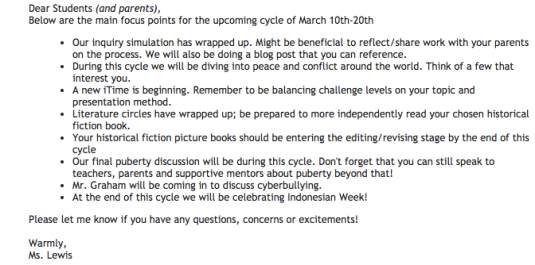
1. Newsflash
Rather than sending out a weekly newsletter, I send out cyclical ( due to our schedule) notes to students and then cc parents into the e-mail. By sending it out to my fifth grade students, I consciously develop autonomy and give parents a tool to prompt conversations.
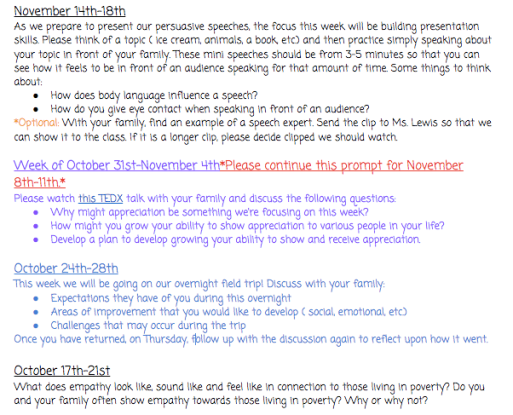
2. Communication Prompts
My school has moved away from traditional homework. That being said, most parents are wanting some way to engage with their child about school. Consequently each week I’ll put up a new communication prompt that either relates to learning in some way–either directly as an academic prompt or more indirectly as a social/emotional prompt. These communication prompts often don’t require anything written down;hence, accountability is with students having to discuss the prompts on Fridays during a class meeting. I share these communication prompts on a running GoogleDoc that both parents and students have access to. Upon reflection, linking the document into the Newsflash notes would further promote accountability.
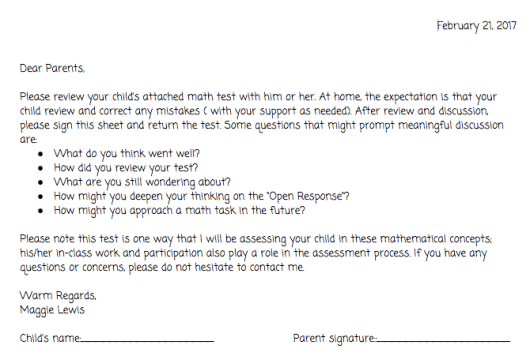
3. Test Follow Up Questions
Sending home math tests is a point of contention as some parents don’t see them or they just look for the number of correct questions. By providing a short letter and question prompts, parents are set up to have a higher success rate in discussing the test with their child.
 Wondering for Wisdom